

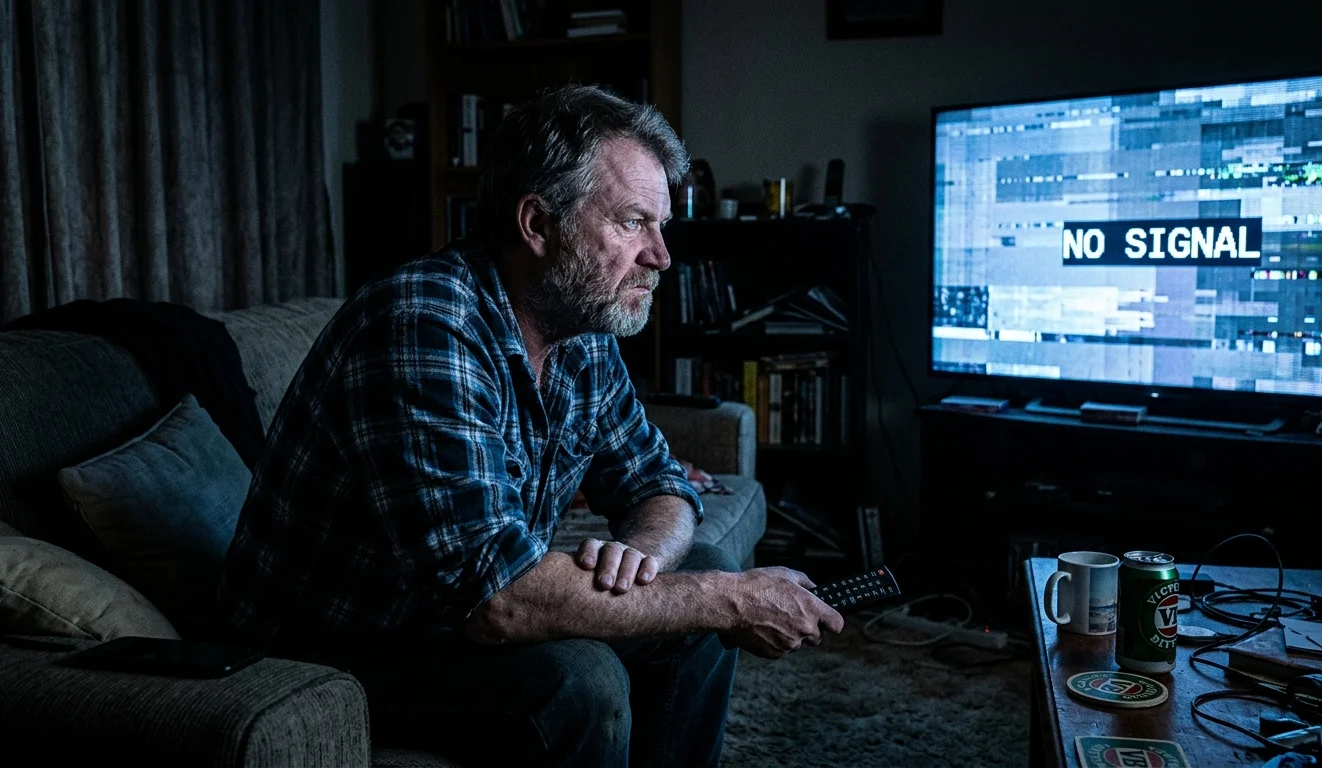
You sit down for the footy, your favourite series, or the evening news, and the screen pixelates, freezes, or the channel disappears entirely. Poor TV reception is one of the most common and most frustrating problems for Sunshine Coast households, and the cause isn’t always obvious.
The good news is that most TV reception problems have a clear explanation, and in many cases, a straightforward fix. At Brocky’s TV, we’ve been diagnosing and resolving antenna and signal issues across the Sunshine Coast for years. Here are the five most common causes we see, and what you can do about each one.
1. Your Antenna Is Damaged or Simply Too Old
Your outdoor antenna takes a beating year-round. Queensland’s UV exposure, coastal salt air, high winds, and storm season all accelerate wear on antenna components. Over time, elements corrode, housings crack, and the internal connections that carry your signal begin to fail.
As Wikipedia’s overview of television antennas explains, antenna performance is directly tied to the physical condition and alignment of the unit. A degraded antenna doesn’t just reduce signal strength, it can introduce noise and interference that makes TV reception unreliable even when conditions are perfect.
Signs your antenna needs attention:
- Visible rust, corrosion, or broken elements
- Antenna that’s shifted position after a storm
- Equipment that’s more than 10 years old
- Gradual signal deterioration over time with no other obvious cause
If your antenna is showing these signs, a professional inspection is the right first step. Our TV antenna booster and upgrade service covers everything from signal assessment to full antenna replacement.
2. Loose, Damaged, or Aged Coaxial Cabling
Your antenna might be in perfect condition, but if the coaxial cable carrying the signal into your home is damaged, kinked, or corroded at the connectors, your TV reception will suffer regardless. This is one of the most commonly overlooked causes of signal problems on the Sunshine Coast, particularly in older homes.
What to look for:
- Frayed or cracked cable insulation, especially in roof cavities or outdoors
- Loose connections at wall plates, splitters, or the back of the TV
- Water ingress into outdoor cable joins or connectors
- Signal that varies with temperature or weather
Check every connection point you can access. Tighten loose fittings and replace any visibly damaged sections. If the cabling runs through your roof cavity or walls, a technician can test the entire line for signal loss and replace what’s needed.
3. Incorrect Antenna Alignment or Positioning
A TV antenna has to be pointed at the right transmitter tower to work properly. If your antenna has shifted after a storm, was never correctly aligned during installation, or is positioned on a part of your roof where terrain or structures obstruct the signal path, your TV reception will be inconsistent at best.
The Sunshine Coast’s varied terrain, including its hilly hinterland and coastal geography, means that antenna positioning matters more here than in flat suburban areas. Line-of-sight to the transmitter is everything with digital signals.
What tends to help:
- Repositioning the antenna to a higher or less obstructed point on the roof
- Professional realignment using a signal strength meter
- Selecting the correct antenna type for your specific location and transmitter
Our local TV antenna service includes precise alignment using professional-grade signal meters, ensuring your antenna is pointed for the strongest possible signal based on where you actually live.
4. Signal Interference From Structures, Trees, or Electronics

Digital TV reception can be disrupted by physical obstructions and electronic interference alike. Buildings, large trees, hills, and even new construction near your property can block or reflect the signal path between your antenna and the transmitter tower.
Closer to home, interference from other electronics can also play a role. 4G and 5G mobile signals, poorly shielded cabling, and certain household devices can create noise that degrades your signal, particularly on channels that share frequency bands with mobile networks.
Common interference scenarios on the Sunshine Coast:
- New buildings or large trees grown into the signal path since installation
- 4G interference on certain free-to-air channels
- Cheap or unshielded splitters adding noise to the signal
- Electrical devices near the TV or antenna cabling
SBS’s official TV reception troubleshooting resource on fixing digital TV reception issues provides useful guidance on interference and retuning steps that are worth working through before calling a technician.
5. Using the Wrong Signal Booster, or Using One When You Shouldn’t
It seems logical: if the signal is weak, boost it. But the wrong type of amplifier, or a booster used in the wrong situation, can actually make your TV reception worse. Overamplification saturates the tuner in your TV, increasing noise rather than clarity. A booster installed on an already-strong signal causes the same problem.
When a booster genuinely helps:
- You’re in a fringe reception area where the signal is genuinely weak
- You’re distributing signal across multiple TVs through splitters
- Your signal level tests show you’re below the acceptable threshold
When a booster won’t help:
- Your antenna or cabling is the actual fault
- You’re already receiving a strong signal and just have a picture quality issue
- Interference rather than signal weakness is the underlying problem
Getting this diagnosis right is important, because installing a booster on a faulty system doesn’t fix the system. It just amplifies the problem. Our technicians test signal levels before recommending any amplification solution, so you only pay for what will actually help.
What to Try Before Calling a Technician
Some reception issues resolve with a few simple steps worth trying first:
- Retune your TV by going to the channel or setup menu and running a full auto scan
- Check all visible cable connections at the TV, wall plate, and any splitter boxes
- Restart your TV and set-top box completely
- Check if neighbours are experiencing the same issue, which points to a transmitter problem
- Visit the Brocky’s TV reception fix resource for a more detailed troubleshooting walkthrough
If none of these steps improve your picture, the fault is most likely with your antenna system and needs a professional assessment.
When to Call Brocky’s TV
If you’ve worked through the basics and your TV reception is still pixelating, dropping out, or missing channels, it’s time to bring in a technician. At Brocky’s TV, we carry out signal level testing, full antenna inspections, cabling assessments, and complete system upgrades across the Sunshine Coast, with fast response times and transparent pricing.
See what our Sunshine Coast customers have to say about our work on our Google Business listing before you get in touch.
Visit us or get in touch: call 0754059022, Monday to Friday during business hours. Contact us today to book your signal assessment or get a no-obligation quote on any antenna work.
FAQs
1. Why does my TV reception only drop out at certain times of day?
Signal strength can vary with temperature, atmospheric conditions, and network congestion at the transmitter. If dropouts happen consistently at the same time, it often points to a weak signal being pushed past its limit by peak-hour demand or daily temperature changes affecting your cabling.
2. Can I fix poor TV reception myself?
Simple steps like retuning, checking cable connections, and repositioning an accessible antenna are worth trying. However, roof access, signal level testing, and cabling repairs inside walls or roof cavities should always be handled by a professional.
3. Why do I lose some channels but not others?
Different channels broadcast on different frequencies. If you lose specific channels, it often means your antenna isn’t optimised for those frequencies, or there’s interference on a particular band. A professional signal test will identify exactly which frequencies are affected.
4. Will a signal booster definitely fix my TV reception?
Not always. A booster helps when the signal is genuinely weak, but it won’t fix a damaged antenna, faulty cabling, or interference-related problems. Getting the diagnosis right before installing a booster saves time and money.
5. Do you service areas outside Maroochydore on the Sunshine Coast?
Yes. We service the full Sunshine Coast region including Noosa, Caloundra, Buderim, Nambour, Coolum, and surrounding areas.