

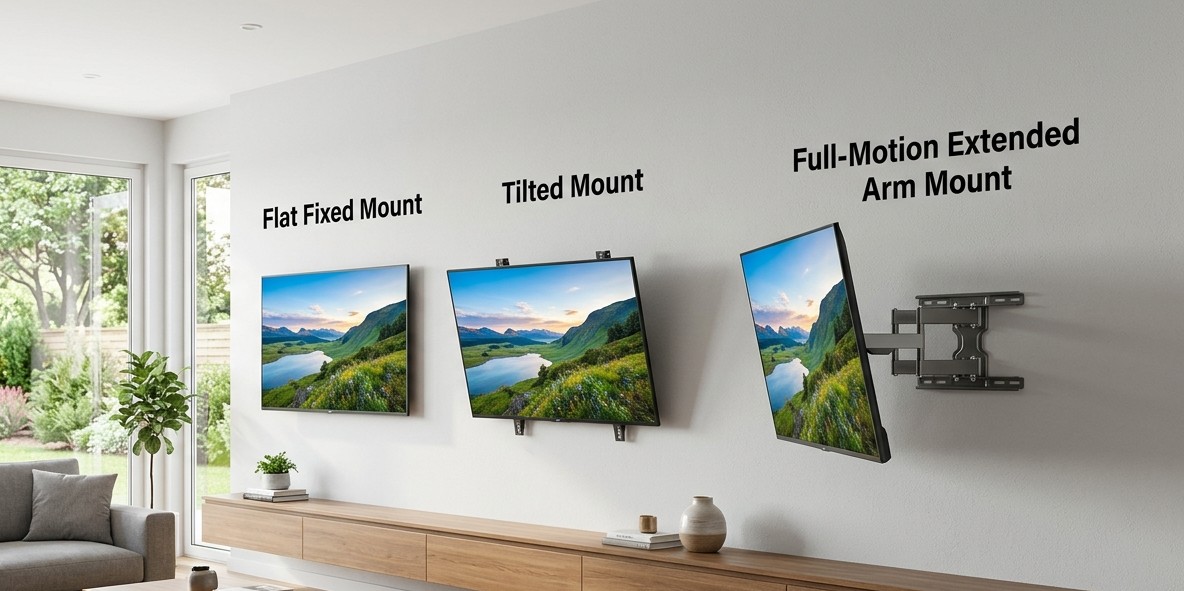
So you’ve picked out your new TV, cleared a spot on the wall, and now you’re staring down a whole aisle of brackets wondering which one you actually need. It’s a more important decision than most people expect the wrong bracket can mean glare you can’t fix, an awkward viewing angle, or a TV that simply doesn’t sit right in the room.
Getting TV wall mounting Sunshine Coast households can rely on starts with choosing the correct bracket type for your specific room and viewing habits. Whether you’re doing it yourself or bringing in Home TV wall Mounting Specialists Sunshine Coast locals trust, understanding the difference between fixed, tilt, and full-motion brackets will save you money, hassle, and a second trip to the hardware store. Here’s everything you need to know before you drill a single hole.
The Three Main Bracket Types Explained
1. Fixed Brackets
A fixed bracket holds your TV flat against the wall with zero movement once installed. It sits close to the wall, usually just 10-30mm out, giving a sleek, low-profile finish that many homeowners prefer for a clean, modern look.
Best for:
- Rooms with a single, centred seating position
- Homes wanting the most affordable and secure option
- Anyone prioritising a minimal, flush-to-wall appearance
Because there’s no moving mechanism, fixed brackets are also generally the easiest and quickest to install correctly.
2. Tilt Brackets
Tilt brackets allow the screen to angle up or down, typically somewhere between 5 and 15 degrees. This small adjustment solves a surprisingly common problem in Australian homes glare.
Best for:
- TVs mounted above eye level, such as above a cabinet or fireplace
- Rooms with strong afternoon light, particularly on west-facing walls
- Bedrooms where you’re often watching from a reclined position
If your TV needs to sit a little higher than ideal, a tilt bracket is often the practical middle ground between a fixed mount and something more elaborate.
3. Full-Motion Brackets
Full-motion (or articulating) brackets extend, swivel, and tilt, giving you the most flexibility of the three options. They’re ideal for open-plan spaces or rooms where people watch from multiple angles.
Best for:
- Open-plan living and kitchen combo areas
- Corner installations where a straight-on angle isn’t possible
- Households wanting to pull the screen out and adjust it as needed
The trade-off is cost and installation complexity. Full-motion brackets require stronger wall fixings, since extending the arm multiplies the load placed on the wall.
What to Check Before You Buy Any Bracket
Regardless of which type you choose, a few details matter for every installation:
- Weight rating — the bracket should support at least 1.5 times your TV’s actual weight
- VESA compatibility — check your TV’s VESA mounting pattern, the standardised hole spacing on the back of your screen, to ensure the bracket fits properly
- Wall structure — plasterboard alone can’t safely hold a mounted TV; fixings need to reach timber studs or masonry
- Cable planning — decide on your cable concealment method before drilling, not after
Getting these details wrong is one of the most common reasons DIY TV wall mounting jobs need to be redone.
Matching the Bracket to Your Room
A simple way to think about it: if your living room has one clear, centred seating area, a fixed or tilt bracket usually does the job perfectly well. If it’s a larger, open-plan space where people watch from the kitchen bench, the couch, and the dining table, a full-motion bracket gives you the flexibility to adjust the screen as needed.

It’s also worth considering how the bracket pairs with your overall setup. If you’re mounting a new screen and want to compare a wall-mounted approach against a traditional stand, our guide on wall-mounted TV vs TV stand breaks down the pros and cons of each to help you decide what suits your space.
Why Wall Type Changes the Installation
Australian homes commonly feature plasterboard on timber studs, solid brick, or masonry walls, and each requires a different fixing approach. Plasterboard demands finding and drilling into structural studs, while masonry walls need the correct anchors rated for the material. According to detailed bracket guidance from the Sparky Direct TV bracket resource, full-motion brackets in particular require deeper anchors and additional fixings due to the leverage created as the arm extends something worth factoring in before committing to a full-motion setup on your own.
When It’s Worth Calling in the Professionals
Mounting a small TV with a fixed bracket on plasterboard is a manageable DIY job for many homeowners. But once you’re dealing with larger screens, full-motion brackets, brick or masonry walls, or cable concealment through the wall, the margin for error grows quickly.
This is exactly where experienced Home TV wall Mounting Specialists Sunshine Coast residents call on make the difference. At Brocky’s TV, we handle bracket selection, wall assessment, and installation so your TV ends up secure, level, and positioned exactly where it should be without the guesswork.
Our TV wall Mounting Sunshine Coast service covers everything from bracket recommendation through to full cable concealment, for screens of every size and wall type. If you’re setting up a brand-new Smart TV alongside your mounting job, our Smart TV Setup Sunshine Coast service can take care of the full configuration too, so everything works properly from day one.
You can see what local Sunshine Coast homeowners have said about our installations on our Google Business Profile.
FAQs
1. What’s the most common TV bracket type for Australian homes?
Fixed brackets remain the most popular choice, largely due to their affordability, secure fit, and clean, flush appearance against the wall.
2. Do I need a full-motion bracket for a small TV?
Not usually. Full-motion brackets are best suited to larger screens or rooms with multiple viewing angles, while smaller TVs generally do fine with a fixed or tilt bracket.
3. Can any bracket be installed on plasterboard?
Only if it’s fixed into the underlying timber studs. Plasterboard alone cannot safely support a mounted television.
4. How do I know my TV’s VESA size?
Check your TV’s manual, or search your exact model number online, as the VESA pattern is a standard specification listed by the manufacturer.
5. Do full-motion brackets damage the wall over time?
Not if installed correctly. As long as the bracket is fixed into structural studs or masonry with the right anchors and rated for your TV’s weight, a full-motion bracket won’t cause wall damage, even with regular movement.
Final Thoughts
Choosing between fixed, tilt, and full-motion brackets comes down to how you actually use your living space, not just which option looks the most impressive in the box. A clear, centred lounge room usually calls for something simple, while open-plan homes benefit from the flexibility of full-motion. Whatever you choose, proper TV wall mounting Sunshine Coast installation ensures your new screen is safe, secure, and positioned exactly where it should be.
Ready to get it mounted properly the first time? Contact us today to book your TV mounting and get expert advice on the right bracket for your home.