

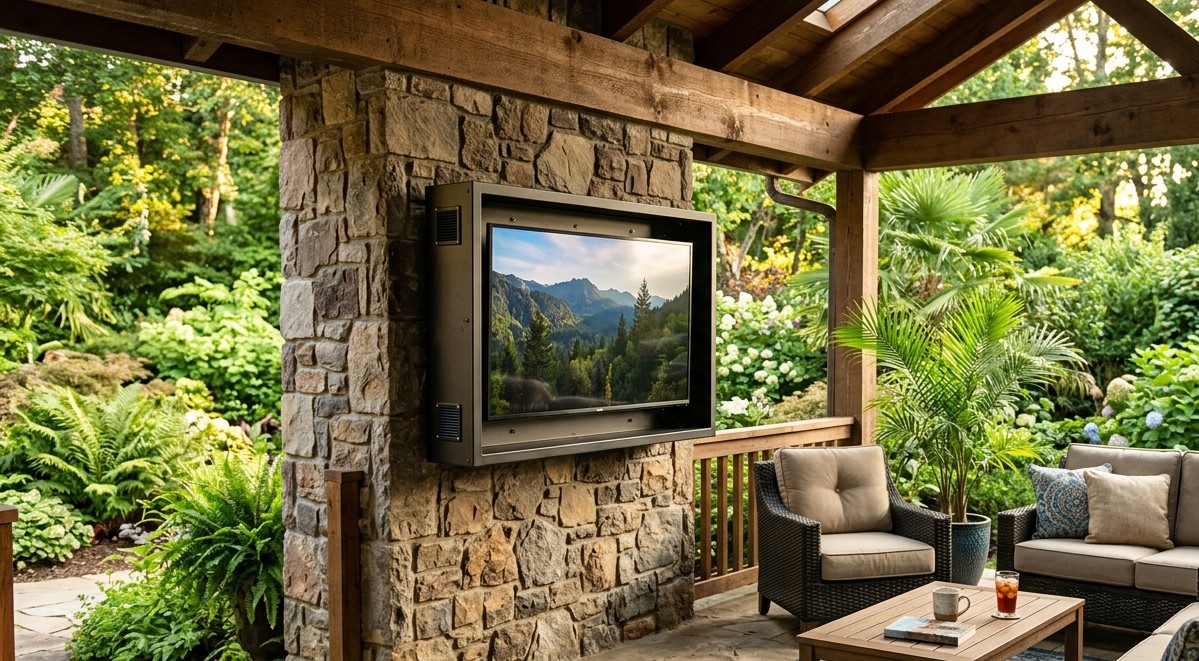
There’s something genuinely great about watching the footy from your own back deck, beer in hand, without having to squint at a phone screen. Outdoor entertaining areas have become a real focus for Sunshine Coast homeowners, and an outdoor TV is often the missing piece that ties the whole space together.
But before you grab whatever TV is on special and bolt it to the patio wall, it’s worth understanding what’s actually involved. Proper outdoor TV installation Sunshine Coast homes need isn’t the same as mounting a screen indoors our coastal climate brings humidity, salt air, and harsh sun that standard indoor televisions simply aren’t built to handle. This guide walks through exactly what you need to know before taking the leap.
Why Outdoor TVs Need Special Consideration
Standard indoor televisions are built for climate-controlled rooms, not for sitting exposed to the elements. Heat, moisture, dust, and direct sunlight can all affect a standard TV’s internal components far faster than most people expect, often leading to premature failure within months rather than years.
This is where weatherproof TV mounting becomes essential, not optional. It’s not just about the television itself, but the entire setup, from the screen to the bracket to the cabling, all needing to withstand conditions a typical lounge room never sees.
Choosing the Right TV for Outdoor Use
Option 1: A Dedicated Outdoor-Rated TV
Purpose-built outdoor televisions are designed from the ground up to handle direct sun exposure, rain, humidity, and temperature swings. They typically feature higher brightness levels to remain visible in daylight and sealed components to resist moisture ingress.
Option 2: A Standard TV in a Weatherproof Enclosure
For homes with a covered patio or alfresco area, a quality weatherproof enclosure can protect a standard indoor TV at a noticeably lower cost than a dedicated outdoor model. This option works well provided the area offers genuine shelter from direct rain and extreme sun exposure.
Whichever option you choose, checking the IP (Ingress Protection) rating of any enclosure or outdoor-rated device is essential. This standardised rating system indicates exactly how well a product resists dust and water, giving you a clear, objective way to compare different options rather than relying on vague marketing claims.
Where to Position Your Outdoor TV
Positioning matters more outdoors than indoors, largely due to glare and weather exposure:
- Choose a shaded location under a patio roof, pergola, or covered alfresco area wherever possible
- Avoid north-facing installations where direct sunlight hits the screen for extended periods
- Keep the TV away from sprinkler zones and areas prone to pooling water
- Allow for ventilation around the unit, rather than sealing it too tightly, to prevent heat buildup
- Consider wind exposure, particularly for elevated or exposed outdoor areas common across the Sunshine Coast
Why Weatherproof TV Mounting Matters So Much Here
A standard indoor bracket simply isn’t built for outdoor conditions. Salt air along the Sunshine Coast accelerates corrosion on untreated metal components, which can lead to a mount failing structurally over time, not just cosmetically.

Proper weatherproof TV mounting should include:
- Powder-coated or stainless-steel brackets rated specifically for outdoor and coastal use
- Weatherproof cable conduits to protect HDMI and power cabling from moisture and UV degradation
- Secure fixings appropriate for your wall type, accounting for added wind load on exposed installations
- Sealed outdoor power points rated for external use, installed by a licensed electrician
According to detailed outdoor mounting guidance from MountPro’s outdoor TV installation guide, a fixed or tilting mount is generally the most practical choice for a covered patio with a single primary viewing direction, while full-motion mounts suit larger, multi-zone outdoor living areas.
Signal: Don’t Rely on Wi-Fi Alone
One commonly overlooked detail is how the outdoor TV actually receives its signal. Relying purely on Wi-Fi for outdoor streaming is often unreliable, particularly if the TV sits some distance from your router or behind brick walls. Running a dedicated antenna point to your outdoor area, connected through your existing antenna system, generally provides a far more stable picture, especially for live sport.
Common Mistakes to Avoid
- Using a standard indoor TV without any weatherproofing at all
- Mounting directly in full sun without considering glare or heat buildup
- Using indoor-rated brackets and cables, which corrode quickly in coastal conditions
- Skipping professional electrical work for outdoor power points, which creates genuine safety risks
- Underestimating installation complexity, assuming it’s the same process as an indoor mount
When to Bring in the Professionals
A simple, shaded outdoor TV setup might be manageable for confident DIYers. But once you’re dealing with structural mounting, weatherproof cabling, electrical work, or signal extension to an outdoor area, the risks of getting it wrong (corrosion, water damage, or unsafe wiring) generally outweigh any savings from doing it yourself.
At Brocky’s TV, we handle outdoor TV installations with the same care and attention we bring to every job, assessing your specific space, climate exposure, and viewing needs before recommending the right setup.
Our TV Mounting Sunshine Coast service covers both indoor and outdoor installations, using appropriately rated brackets and materials for lasting results. If you’re also setting up a new Smart TV as part of your outdoor entertainment area, our Smart TV Setup Sunshine Coast service ensures everything is configured correctly from day one.
For more on why proper mounting matters generally, our guide on the benefits of professional TV wall mounting covers the fundamentals that apply indoors and outdoors alike.
You can see what local Sunshine Coast homeowners have said about our installations on our Google Business Profile.
FAQs
1. Can I use a regular TV outside if it’s under a covered patio?
Yes, provided it’s protected with a proper weatherproof enclosure rated for outdoor conditions, including protection from humidity and dust.
2. What IP rating should I look for in an outdoor TV enclosure?
Generally, IP65 or higher is recommended for genuine outdoor protection against both dust and water exposure.
3. Do outdoor TVs need a different antenna connection?
Not a different type, but running a dedicated antenna point to the outdoor area typically provides more reliable reception than relying on Wi-Fi streaming alone.
4. How long does a standard indoor TV last if mounted outside without protection?
Often just a few months, as heat, humidity, and dust exposure rapidly degrade internal components not designed for outdoor conditions.
5. Is a full-motion bracket better than a fixed one for outdoor TVs?
It depends on the space. A fixed or tilting mount suits a covered patio with one primary viewing direction, while full-motion suits larger, multi-zone outdoor living areas.
Final Thoughts
An outdoor TV can genuinely transform how you use your entertaining space, but only if it’s set up properly from the start. From choosing the right screen or enclosure to ensuring your bracket and cabling can handle coastal conditions, every detail matters. With proper outdoor TV installation Sunshine Coast homeowners can enjoy their new setup for years rather than months, without dealing with premature corrosion or water damage.
Ready to bring the big screen outside? Contact us today and let our team assess your space and set up an outdoor TV that’s actually built to last.