

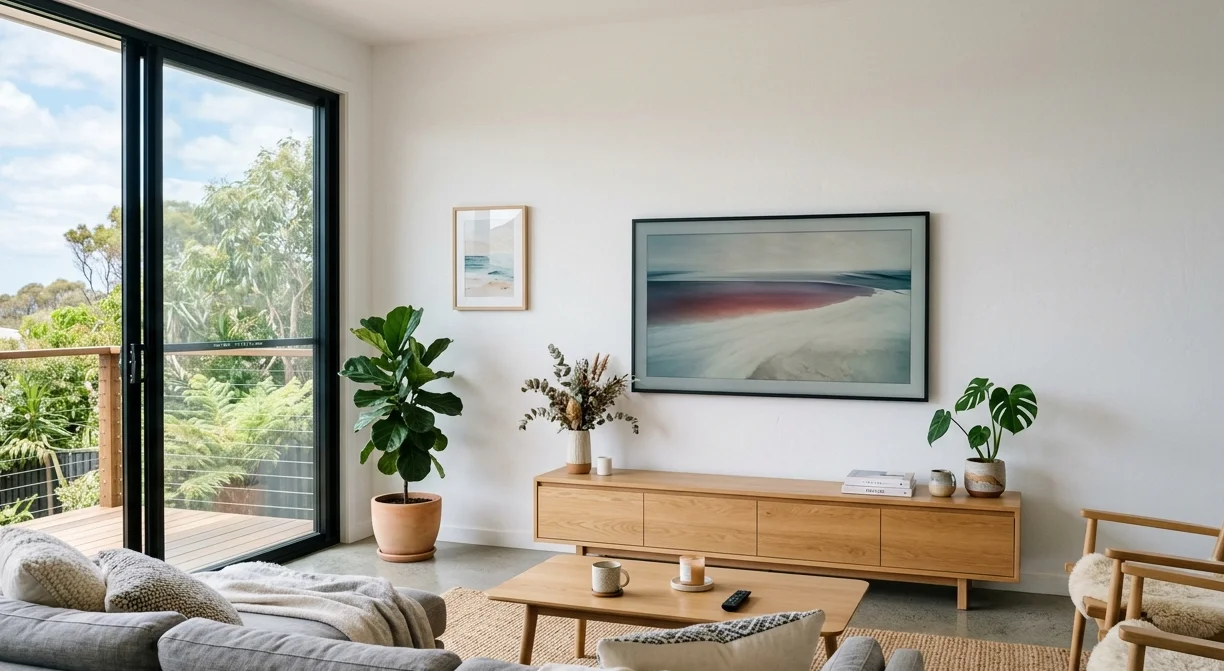
A wall-mounted TV looks absolutely stunning, right up until you notice the bundle of TV cables dropping down the wall like a waterfall of wires. It’s one of the most common complaints we hear from Sunshine Coast homeowners after a new TV is installed, and it’s entirely avoidable with a bit of planning and the right approach.
Whether you’ve just had a TV mounted or you’re looking to clean up an existing setup, hiding TV cables properly transforms a room from cluttered to genuinely polished. Here’s everything you need to know, from the simplest surface solutions to a fully concealed in-wall installation.
Why Hiding TV Cables Is Worth the Effort
Exposed TV cables aren’t just an aesthetic problem. Loose cables trailing down a wall or across a floor create real safety risks, particularly in homes with young children or pets. They collect dust, get stepped on, and over time the constant movement and bending damages the cables themselves, leading to signal dropouts or power issues.
As Wikipedia’s overview of cable management explains, proper cable organisation both supports and protects cables during installation and makes future maintenance or changes significantly easier. Getting it right from the start saves you time, money, and frustration down the track.
What to Consider Before You Start
Before choosing a cable-hiding method, a few quick considerations will save you from redoing the job later:
- Wall type — plasterboard, brick, and concrete all require different approaches
- TV mounting height — affects how far cables need to travel and which routes are practical
- Number of connected devices — soundbars, streaming devices, gaming consoles, and set-top boxes all add to your cable count
- Power outlet placement — your nearest power point determines which concealment method is most practical
- Future access — some solutions are permanent, others allow easy cable changes later
Taking five minutes to think through these points upfront prevents a lot of frustration later.
The Best Methods for Hiding TV Cables
1. Surface Cable Channels and Raceway Covers
This is the most popular starting point for Sunshine Coast homeowners who want a clean result without major wall work. Surface cable channels, also called raceways or cable covers, attach directly to the wall and enclose your TV cables in a neat plastic housing that runs from the TV down to the power outlet.
Why they work well:
- No cutting into walls required
- Quick and straightforward to install
- Available in white and various colours, most are paintable to match your wall
- Easily reopened if you need to add or change cables later
For a single TV with a handful of cables, a quality raceway system does the job neatly and affordably.
2. In-Wall Cable Concealment
For the cleanest possible result, running TV cables inside the wall cavity is the gold standard. When done properly, there’s simply nothing visible between the TV and the wall, creating the true floating TV effect that looks so impressive in modern interiors.
Key things to know:
- Requires cutting access holes in the wall and fishing cables through the cavity
- Power cables must be run through proper conduit or using purpose-built in-wall power solutions to comply with Australian electrical safety standards
- Best suited to permanent setups where you won’t be moving the TV regularly
- Works best on plasterboard walls, concrete and brick walls require more specialised work
For RS Components’ detailed guidance on effective electrical cable and wire management, including in-wall routing best practices, it’s worth reading before committing to any in-wall work.
3. Using Furniture to Route Cables
Entertainment units, floating shelves, and TV cabinets provide a practical way to hide TV cables without any wall modifications at all. This approach suits renters particularly well, as it leaves the walls completely untouched.
Effective furniture-based techniques:
- Route cables behind the cabinet or unit and down through a rear cable cutout
- Bundle multiple cables together with cable sleeves to keep them tidy inside the furniture
- Use cable clips to secure runs neatly along the back panels
- Manage excess cable length inside the cabinet rather than leaving it visible
4. Cable Sleeves and Wraps
If your TV cables run down a section of wall or along a surface, grouping them all into a single cable sleeve creates a much tidier result than multiple loose wires. Sleeves are available in fabric, neoprene, and spiral wrap options depending on how many cables you’re bundling and how flexible you need the result to be.

Benefits of cable sleeves:
- Group multiple TV cables into one clean run
- Protect cables from bending, abrasion, and UV exposure
- Available in black, white, and grey to suit most interiors
- Easy to install and adjust without tools
5. Skirting Board and Floor Cable Routes
In rooms where wall-mounting isn’t practical or the TV is on a stand, routing TV cables along skirting boards using flat cable covers keeps everything neat at floor level. Flat cable covers sit flush against the skirting and blend naturally with the room when painted to match.
This approach works particularly well for:
- Freestanding TV setups on entertainment units
- Rooms where cables need to travel longer distances
- Rentals where wall modifications aren’t permitted
Important Safety Tips for Hiding TV Cables
However you choose to conceal your TV cables, these safety considerations are non-negotiable:
- Never run power cables through walls without proper conduit or in-wall rated power solutions, this must comply with Australian electrical standards
- Avoid tight bends in cables, particularly HDMI and coaxial cables, as sharp bends cause signal loss over time
- Keep power cables and signal cables separated wherever possible to avoid interference
- Don’t trap cables under heavy furniture or pinch them in door frames
- Make sure all equipment still has adequate ventilation after cables are routed
DIY vs Professional Cable Concealment
Surface solutions like raceways and cable sleeves are well within most people’s DIY capabilities. In-wall concealment is a different matter. Cutting into walls, fishing cables through cavities, and ensuring power routing complies with Australian safety standards is work that genuinely benefits from professional handling.
Our TV mounting service on the Sunshine Coast includes professional cable concealment as part of every wall-mount installation, so your TV looks exactly the way it should from the moment it goes up.
For tips on how to get the most from your TV wall mount setup, our blog on TV wall mounting covers positioning, bracket selection, and common mistakes worth avoiding.
Get a Professionally Installed, Cable-Free TV Setup
A clean, cable-free TV setup doesn’t happen by accident. It takes the right method for your wall type, the right products, and in many cases, a professional eye to get the result that actually looks as good as it should.
At Brocky’s TV, we handle TV mounting and cable concealment for Sunshine Coast homes every day, with fast turnaround times and the kind of finish that makes the whole room look better.
See what other Sunshine Coast locals have said about our installations by checking out customer reviews before you get in touch.
Call us on 0754059022, Monday to Friday during business hours. Contact us today to book your TV mounting and cable concealment service or get a no-obligation quote.
FAQs
1. Can I hide power cables inside the wall myself?
In Australia, in-wall power cable routing must meet electrical safety standards. Purpose-built in-wall power kits are the safest DIY option. Standard power cabling inside walls requires a licensed electrician.
2. Will hiding TV cables affect picture or sound quality?
Not if done correctly. Avoid sharp bends in HDMI and coaxial cables and keep runs as short as practical. Poorly routed cables with tight bends can cause signal issues over time.
3. What is the easiest way to hide TV cables without touching the wall?
Surface cable raceways are the simplest option, attaching directly to the wall with adhesive or small fixings. For freestanding TVs, routing cables behind an entertainment unit works just as well.
4. How do I hide cables on a brick or concrete wall?
In-wall concealment is complex on masonry and usually needs professional help. Surface raceways painted to match the wall are often the most practical solution.
5. Can cable concealment be added after the TV is already mounted?
Absolutely. We regularly help Sunshine Coast homeowners tidy up existing TV installations. We’ll advise the best approach for your wall type and cable count.