

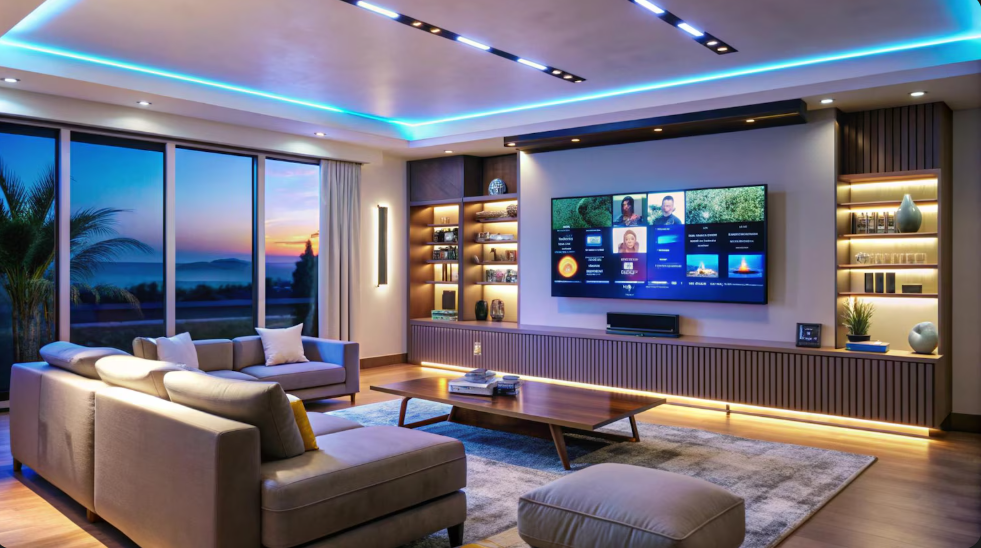
Exposed TV cables can quickly ruin the appearance of an otherwise modern living space. This guide explains how to hide TV cables with practical, safe, and visually clean solutions suited to homes and apartments. From wall-mounted TVs to entertainment units, the article covers cable management methods, including wall channels, in-wall concealment, furniture routing, and surface covers. Understanding the right approach helps reduce clutter, improve safety, and protect cables from wear and tear. Whether you prefer a DIY option or professional assistance, these solutions help achieve a clean, organised, and modern TV setup.
Why Visible TV Cables Are a Problem
Loose TV cables are more than a visual distraction. They can create safety risks, collect dust, and become damaged over time. In homes with children or pets, exposed cables may be pulled, chewed, or tripped over.
Modern interiors focus on clean lines and minimal clutter. Hiding TV cables improves room aesthetics while protecting connections from strain and accidental damage.
Things to Consider Before Hiding TV Cables
Before choosing a cable-hiding solution, consider:
- Wall type (plaster, brick, concrete)
- TV mounting height
- Number of connected devices
- Power outlet placement
- Future access for maintenance
Planning helps avoid unnecessary wall damage or cable replacement later.
Cable Management Channels and Covers
One of the most popular solutions for hiding TV cables is using surface-mounted cable channels.
Benefits of cable channels
- Easy installation
- No wall cutting required
- Paintable to match the wall colour
- Accessible for future changes
These channels run vertically or horizontally from the TV to the outlet, neatly concealing cables without permanent alterations.
External home-improvement guides, such as This Old House, cable-management advice, explain how surface cable channels improve safety and visual appeal for wall-mounted TV setups
In-Wall Cable Concealment
For the cleanest result, in-wall cable concealment hides wires completely behind the wall.
Key points
- Requires wall access
- Must comply with electrical safety standards
- Power cables usually need a proper conduit
- Best suited for permanent setups
This option creates a true “floating TV” appearance but is more complex than surface solutions.
Using Furniture to Hide TV Cables
Entertainment units, floating shelves, and cabinets can hide cables without wall work.
Effective furniture techniques
- Route cables behind cabinets
- Use rear cable cut-outs
- Bundle cords with sleeves
- Secure excess cable length
This approach works well for renters or for those who prefer not to modify walls.
Cable Sleeves and Wraps
Cable sleeves group multiple cords into a single, tidy bundle.
Why sleeves help
- Reduce cable clutter
- Protect wires from bending
- Improve airflow
- Simple to install
They are ideal for TV setups with soundbars, gaming consoles, or streaming devices.
External tech-care resources, such as CNET cable organisation tips explain how using cable sleeves helps protect TV cords from wear, bending, and long-term damage in home entertainment setups.
Floor and Skirting Cable Routes
In some rooms, routing cables along skirting boards or floors provides a discreet solution.
Advantages
- Minimal wall impact
- Hidden behind furniture
- Easy access
Flat cable covers are designed to blend with flooring or skirting, reducing visual impact.
Safety Considerations When Hiding TV Cables
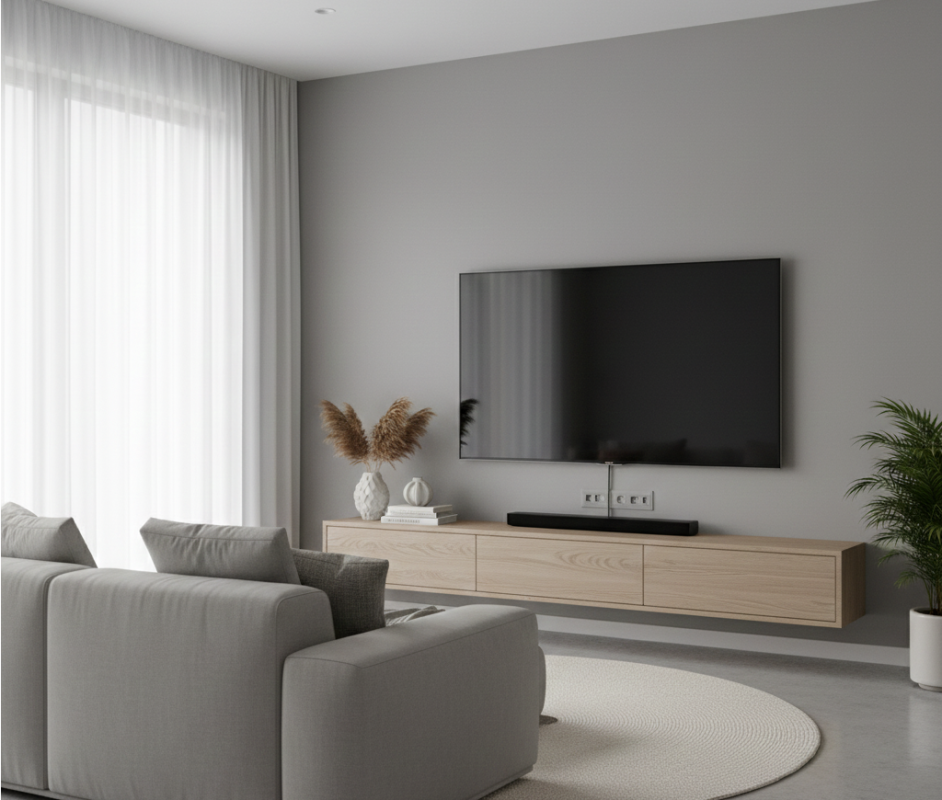
Poor cable management can cause overheating, signal issues, or electrical hazards.
Important safety tips
- Avoid tightly bending cables
- Keep power and signal cables separated
- Do not trap cables under heavy furniture
- Use fire-rated covers where required
External electrical safety references, such asEnergy.gov home cable safety guidance explain why correct cable routing is important for wall-mounted TVs to prevent overheating, strain on connections, and potential safety risks
Common Mistakes to Avoid
Many cable-hiding issues arise from rushed installation.
Mistakes include
- Drilling without checking the wall studs
- Running power cables without proper conduit
- Blocking ventilation behind TVs
- Cutting cables too short
Careful planning prevents long-term issues.
Cable Hiding and Wi-Fi Performance
Poor cable placement can sometimes interfere with Wi-Fi or streaming devices.
If your TV setup includes streaming boxes or smart features, cable routing should avoid blocking antennas or placing devices too close to metal objects.
For related connectivity improvements, this internal resource on fix Wi-Fi issues may be useful.
Wall-Mounted TVs and Cable Concealment
Wall-mounted TVs look best when cables are hidden properly.
Choosing the right mounting height and cable path prevents visible wires from ruining the effect.
For mounting-specific considerations, you may find TV mounting services on the Sunshine Coast helpful.
DIY vs Professional Cable Hiding
DIY solutions work well for simple setups, but complex installations benefit from professional handling.
Professional assistance helps with
- Safe power routing
- Clean in-wall concealment
- Secure TV mounting
- Long-term cable protection
This approach reduces risk and ensures compliance with safety standards.
Final Thoughts & Professional Help
Hiding TV cables transforms a room from cluttered to clean while improving safety and protecting connections. Whether using surface channels, furniture routing, or in-wall solutions, the right approach depends on your space, wall type, and future needs.
For expert help with TV setups, cable management, and repairs, contact Brockys TV – professional TV repair and installation services today. Their team provides reliable support designed to improve functionality while maintaining a clean, modern finish.
FAQs
1. Is it safe to hide TV cables inside walls?
Yes, if done correctly and following electrical safety rules.
2. Can I hide power cables in the wall?
Power cables usually require proper conduit or professional installation.
3. Are cable covers noticeable on walls?
Paintable covers blend well with most walls.
4. Do hidden cables affect TV signal quality?
No, when routed properly without sharp bends.
5. What is the easiest cable-hiding solution?
Surface cable channels are the simplest and safest option.